Close Cookie Popup
Cookie Settings
By clicking “Accept All Cookies”, you agree to the storing of cookies on your device to enhance site navigation, analyze site usage and assist in our marketing efforts. More info


Industry:

Apparel
Products Live:

Shop Pass

Checkout

Cart
Features:
+30%
Prepaid share
85%
User identification with Shop Pass
5k
Anonymous users / day unlocked for retargeting

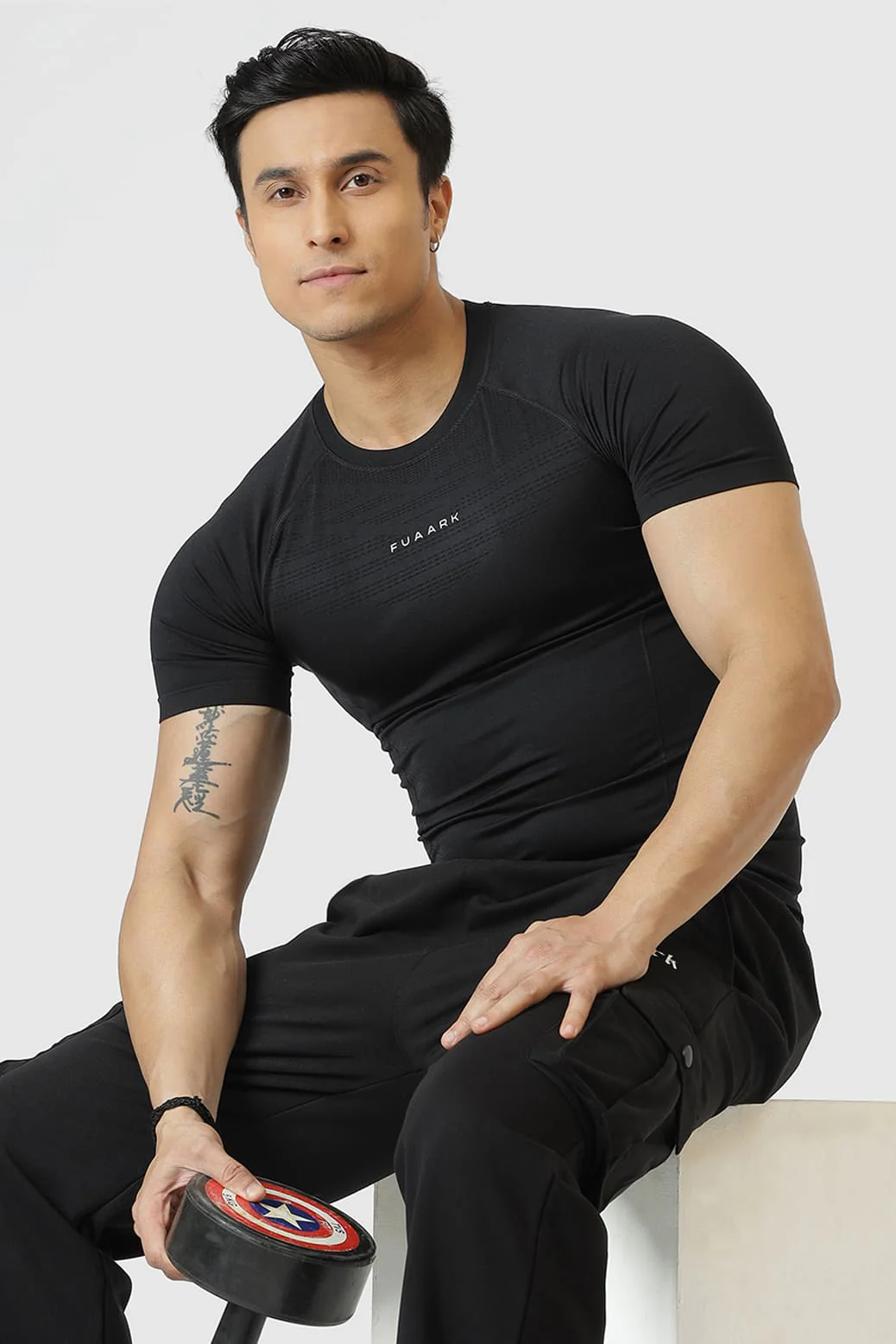
Founded in 2017 in Surat by Rimpy Juneja, Swati Narang Juneja, and Saket Juneja, Fuaark is a homegrown Indian gymwear and activewear brand built for serious training. Focused on performance-driven design, Fuaark creates high-function apparel for men and women — engineered for lifting, cardio, and high-intensity sessions. The brand emphasizes tapered fits, 4-way stretch fabrics, and durable, soft-touch materials that move with the body under stress.
Founded in 2017 in Surat by Rimpy Juneja, Swati Narang Juneja, and Saket Juneja, Fuaark is a homegrown Indian gymwear and activewear brand built for serious training. Focused on performance-driven design, Fuaark creates high-function apparel for men and women — engineered for lifting, cardio, and high-intensity sessions. The brand emphasizes tapered fits, 4-way stretch fabrics, and durable, soft-touch materials that move with the body under stress.
FUAARK was on Shopify Basic. That meant limited checkout control.
“We couldn’t run payment related offers. We couldn’t show any sort of upsell or cross sell items on the checkout.
- Divyang Kalgude, Sr Marketing Manager, Fuaark
This created 3 big challenges.
Most customers were choosing Cash on Delivery.
But the team had no way to encourage prepaid orders.
No payment offers. No smart nudges. No flexibility.
They were simply accepting whatever payment method the customer picked.
And that limited cash flow and control.
FUAARK was getting around 20,000 sessions per day.
But only 250–300 users per day with first-party data attached were entering their retargeting journey.
The remaining ~19,000+ daily visitors were anonymous users — visitors with no phone number or email captured.
Which meant most traffic could not be retargeted.
Like most apparel brands, a majority of revenue came from a small group of core products mainly t-shirts and joggers.
Accessories such as socks contributed less than 1% of GMV. Not because customers didn’t need them.
But because there was no structured way to present them at the moment of highest buying intent in checkout.
Without upsell or cross-sell placements, lower-ticket accessories had no real distribution channel. They weren’t visible when customers were already ready to pay.
As a result, checkout was not helping increase AOV. It was only completing transactions.
The real issue - checkout was just processing orders.
It wasn’t:
And for a performance-focused D2C brand, that’s a missed opportunity.
FUAARK didn’t need more traffic. They needed checkout to do more work.
FUAARK didn’t switch checkout partners impulsively.
Divyang had already worked with multiple checkout solutions across brands. Before finalizing Shopflo, he evaluated other solutions such as Gokwik, Razorpay Magic Checkout and Shiprocket Checkout
This wasn’t a feature comparison exercise. It was a performance decision.
As Divyang explains:
“I did A/B testing as well with Shopflo and other checkouts. There I found Shopflo was giving me much better results in terms of purchase rate and average order value.”
The evaluation came down to four clear criteria.
For FUAARK, the decision wasn’t based on UI demos or feature lists. It was based on A/B testing.
When tested against other checkout partners, Shopflo showed:
Even small friction points mattered.
“I found a very significant lag on that OTP stage… It plays a significant role in that purchase journey.”
At scale, even minor delays during login can impact drop-offs. The checkout that moved faster — converted better.
And the data made the choice clear.
Divyang describes checkout experience as subjective — but impactful.
“I personally feel Shopflo is much more neat and clean in terms of UI UX.”
For a gymwear brand with high mobile traffic, checkout clarity matters. Cross-sells, discounts, and payment options need to be visible — but not overwhelming.
Compared to other solutions tested, Shopflo felt simpler, more structured, and easier to navigate.
And simplicity converts.
One of the biggest limitations with Shopify Basic was the inability to run payment-related offers.
This was non-negotiable for FUAARK.
They needed:
Other solutions provided parts of this — but the combination of control and performance was strongest with Shopflo.
FUAARK wasn’t looking for just a “faster checkout.”
They wanted checkout to:
Many checkout solutions focus heavily on one-click speed.
But for FUAARK, speed alone wasn’t enough.
The checkout had to influence behavior.
When tested holistically; performance, UX, payment control, upsell capability; Shopflo delivered stronger results across the board.
At the end of the evaluation, the decision wasn’t emotional. It was data-backed.
“The purchase rate was better… the average order value was better… address pre-fill rate was better… login rate was better.”
Once FUAARK chose Shopflo, the team focused on three core areas:
Here’s how they executed it.
“Significant delta which Shop Pass has brought to our store.”
- Divyang Kalgude, Sr Marketing Manager, Fuaark
The first unlock was intent capture.
Before Shop Pass, only 250–300 users per day were entering FUAARK’s retargeting journey despite ~20,000 daily sessions.
That meant most visitors couldnt be identified. After implementing Shop Pass:
This dramatically changed retargeting efficiency.
Instead of depending only on returning customers, FUAARK could now retarget high-intent product viewers across WhatsApp, SMS, email, Meta, and Google.
COD was dominating at 70%.
Instead of removing COD (which could hurt conversions), the team introduced a smarter approach.
They introduced a 5% discount on prepaid orders, but with a cap of ₹40.
But the ₹40 cap wasn’t chosen randomly. The team used Shopflo’s A/B testing experiments to determine the right incentive level.
Initially, the prepaid offer was capped at ₹50. They then reduced the cap to ₹40 and ran a controlled experiment to measure the impact on prepaid adoption.
The outcome was clear. There was no drop in prepaid ratio after lowering the cap.
As Divyang explains:
“Earlier we used to offer 50 rupees… when I tried A/B testing and reduced that to 40 rupees, there were no changes in the prepaid ratio.”
This meant:
This is important. FUAARK didn’t increase prepaid from 30% to 60% by giving bigger discounts.
They increased it by:
That’s performance-led checkout strategy and not blanket discounting.
FUAARK’s revenue was concentrated in core SKUs like t-shirts and joggers.
Accessories had low visibility. So instead of pushing them on the homepage, the team moved the strategy to checkout.
They tested:
The insight was powerful. Customers with cart values of ₹5,000 were adding bags even without discounts when shown at checkout.
Socks, which previously contributed less than 1% of GMV, began gaining traction through cross-sell placements.
As Divyang explains:
“To lower ticket size, we cannot promote it directly. But upsell cross placements give good traction and eyeballs.”
They also used one-click add-ons strategically, but only for products that wouldn’t create friction.
In apparel, size selection is always a barrier. If a customer adds a t-shirt at checkout and then has to choose a size again, it breaks the flow. That extra decision step can slow the buyer down or worse, cause drop-off.
To avoid this, FUAARK limited one-click add-ons to free-size items like bags and socks.
This insight was powerful.
It showed that:
As a result, prepaid orders increased from 30% to 60% not because FUAARK offered deeper discounts, but because they used a smarter incentive strategy.
The strategy didn’t stop at implementation. Divyang’s team uses checkout analytics daily to monitor
“We are using your analytics day in, day out… It gives us clarity on how the checkout is working.”
The impact wasn’t incremental, it was meaningful.
Across conversion, order value, and user identification, checkout optimization created measurable gains that directly improved revenue efficiency.
The results are summarized below:
For brands operating at scale, checkout isn’t just infrastructure.
It’s where intent either compounds or leaks. FUAARK chose to make it compound.
As Divyang puts it:
“I will definitely recommend Shopflo for its neat and clean UI UX. I personally feel it’s very user friendly.
Because of their pre-fill rate, and how they helped us improve the prepaid ratio — it has made a real difference for us.”
Let’s make it real. Book a call with our team, and we’ll show you exactly how Shopflo can drive real impact for your brand.
